
Altair Court — Palm Springs
A canyon-inspired landscape shaped by topography and geologic structure


BEFORE
Existing conditions lacked structure and hierarchy across a steep, highly visible site.
BEFORE
AFTER

The front landscape was conceived as an idealized California canyon—using embedded boulders and sculpted topography to create a sense of permanence, with lighting adding a layer of evening drama.
.png)
Front Landscape
Large-scale boulder placement and controlled topography establish a canyon-like structure, with planting used to soften transitions and create continuity across the slope.
AFTER
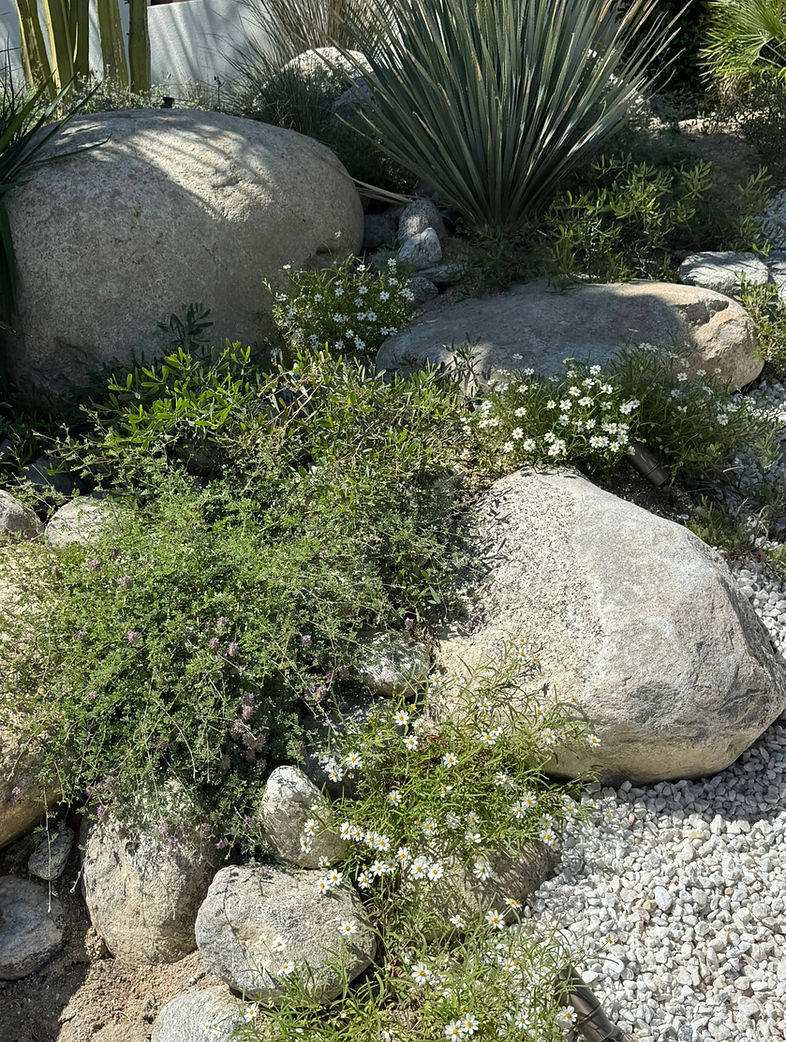


Planting Strategy
A restrained palette of desert-adapted species creates cohesion, with low ground planes softening grade changes and reinforcing the overall composition.
.png)
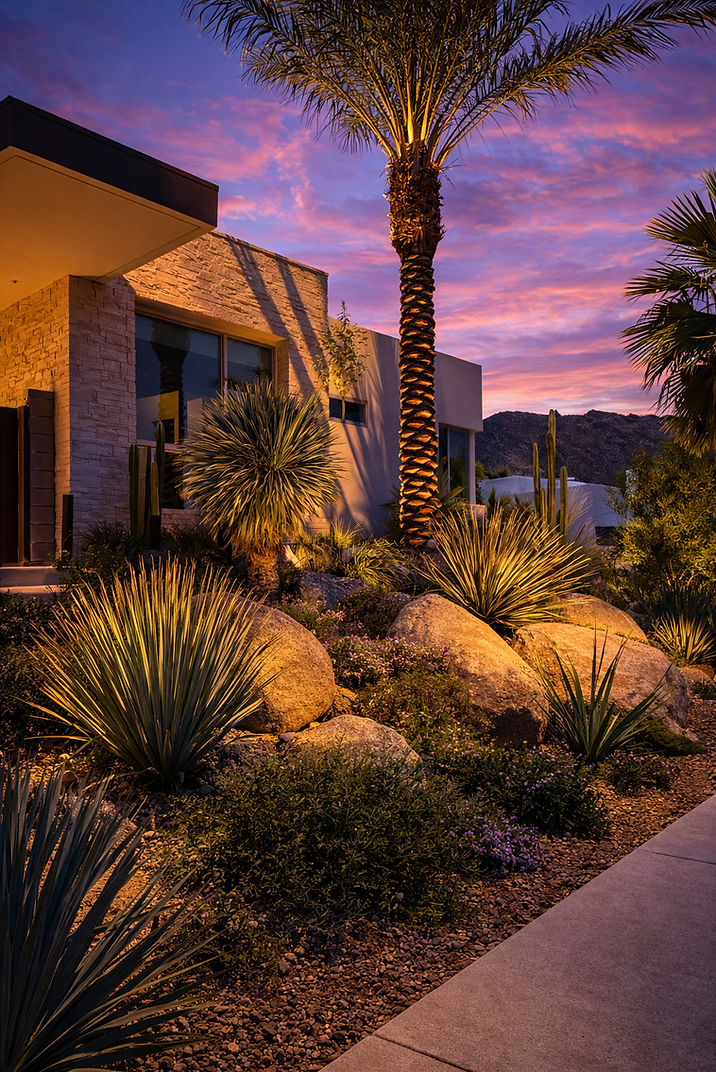
Vertical Elements
Vertical planting introduces rhythm and scale, anchoring the composition against the architecture and surrounding landscape.
Rear Slope Composition
The rear landscape was reworked at multiple scales—reorganizing existing stone across the slope, introducing a defined stair and terraced seating area, and layering desert-adapted planting to bring cohesion and softness to the terrain.


BEFORE
Existing conditions lacked structure and hierarchy, leaving the steep rear slope without a clear or cohesive expression.

AFTER
The steep rear slope was embraced as a defining site condition, with layered planting establishing hierarchy and reinforcing a more canyon-like expression.

BEFORE
An incomplete stair sequence terminated without a defined destination or usable landing.

AFTER
The steps were reimagined to create a clear ascent and a defined terrace—establishing a place to pause, gather, and experience the landscape up close, where detail and moments of discovery unfold along the path.
A landscape shaped by terrain and composition—immersive and visually compelling